Monday - Friday 07:30 - 17:30, Saturday 07:30 - 16:00
Parquet Sand and Lacquer in Islington
Back to Portfolio
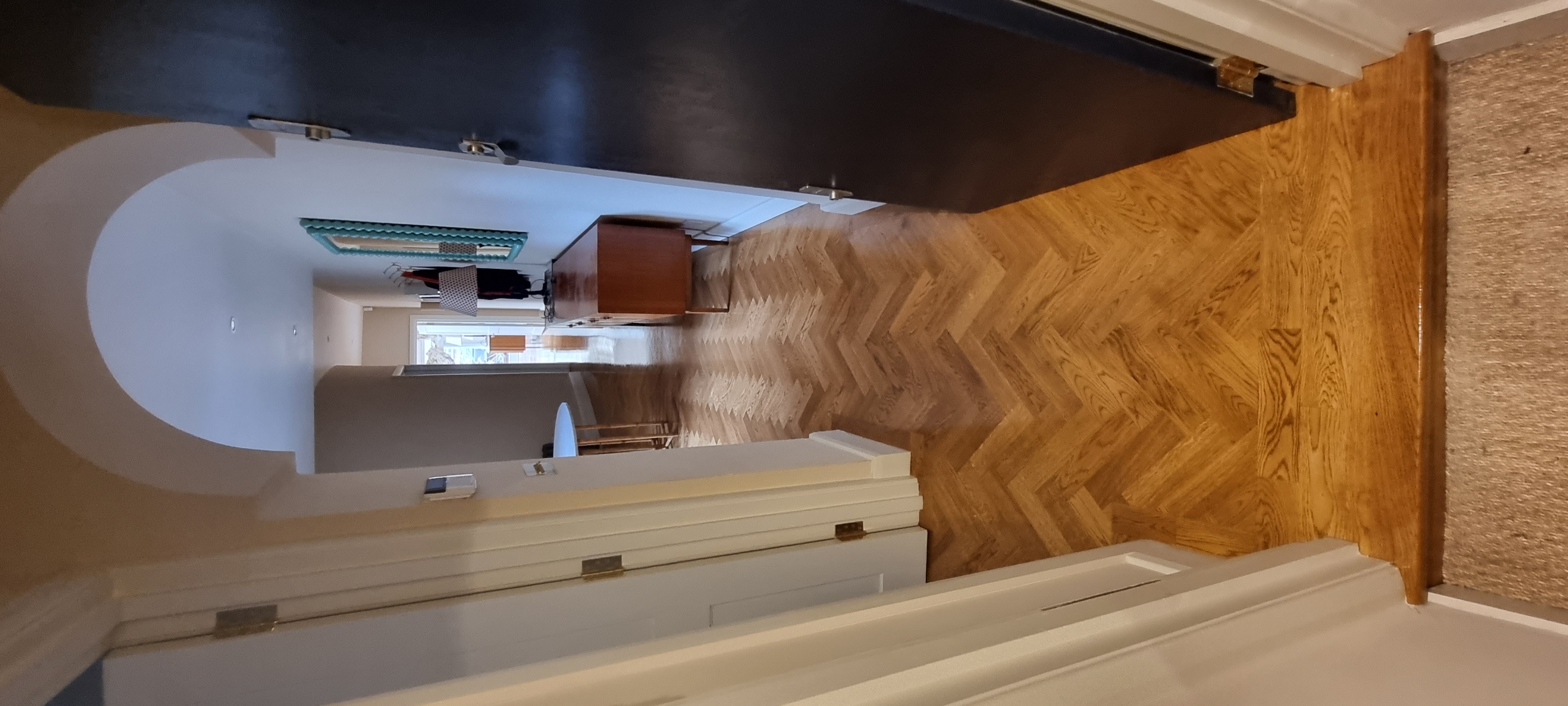
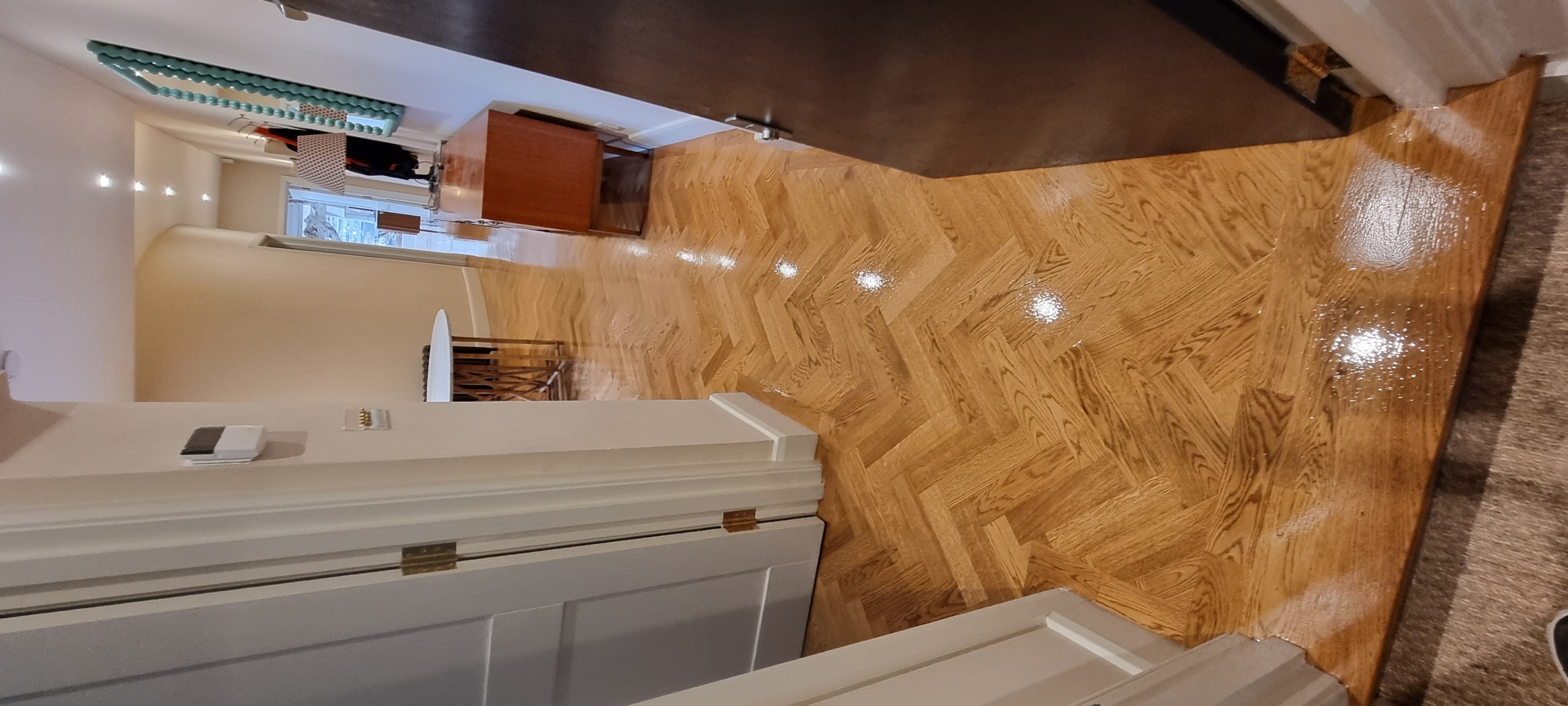
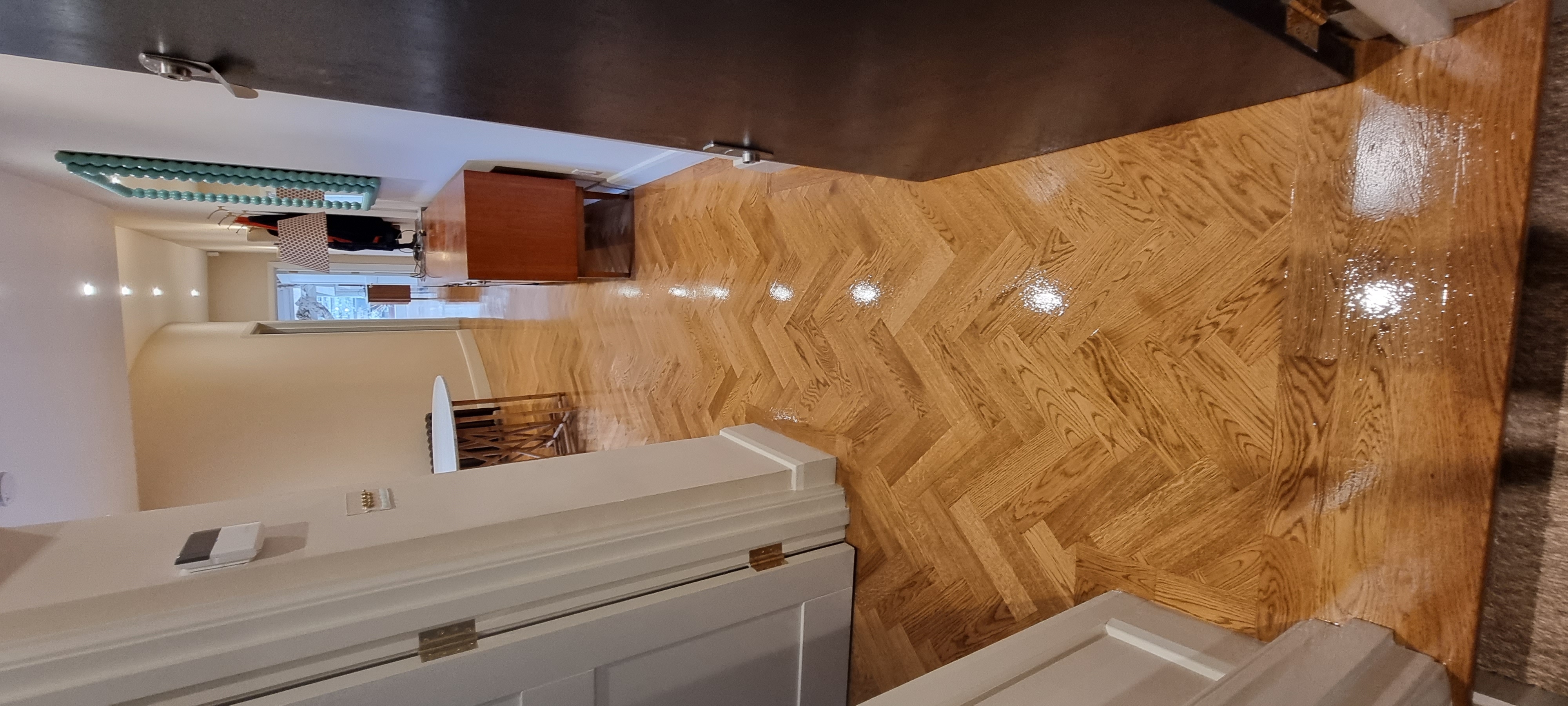
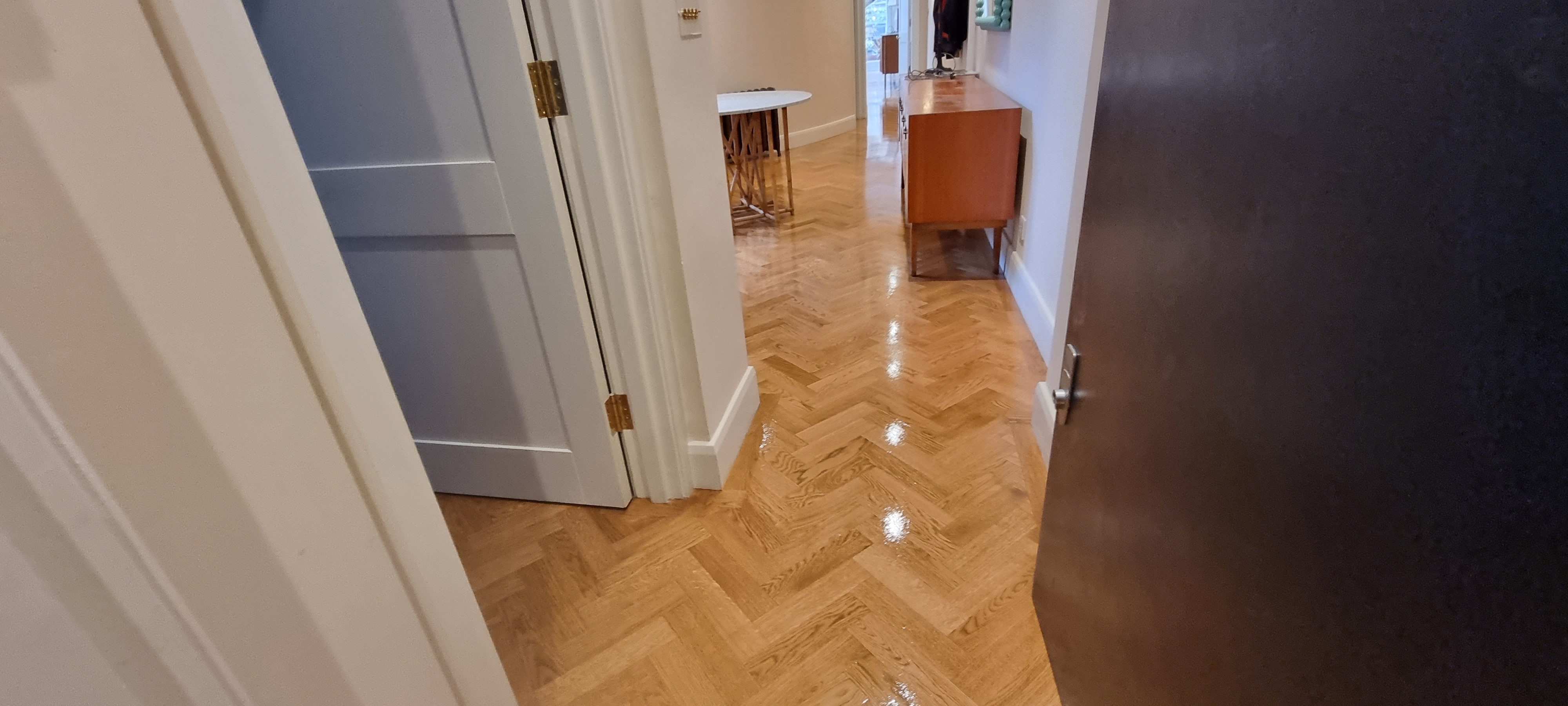
Parquet Sand and Lacquer in Islington
This Victorian terraced property in Islington had original parquet flooring that had seen decades of use. The owners wanted to restore the floor to its former quality rather than replace it, so we carried out a full sanding and lacquer finish across the main living areas.
Work carried out
- Complete floor sanding using multi-stage grit progression
- Dust containment throughout the sanding process
- Edge sanding to reach areas inaccessible to the main machine
- Surface preparation and cleaning between coats
- Application of water-based lacquer finish, three coats
- Quality inspection and final buffing
About the project
The parquet in this Islington home had a worn, scratched surface with areas of darker staining from years of foot traffic. The wood itself was still sound, which meant restoration was a viable option. The challenge here was working within a period property where the floorboards sit at slightly different levels, typical of Victorian construction. We had to adjust our sanding approach to accommodate these variations without over-sanding areas or leaving low spots untouched.
We used a dust containment system throughout the work, which is particularly important in Islington where many properties are semi-detached or terraced. Our team sealed off doorways and ran negative pressure extraction, meaning dust stayed contained rather than spreading into other rooms or neighbouring properties. After sanding to 150 grit, we applied three coats of water-based lacquer. This product was chosen because it cures quickly, creates a durable surface, and produces minimal odour compared to oil-based alternatives. The whole job took four days from start to finish, including drying time between coats.
About our Islington service
Islington has a high concentration of Victorian and Edwardian terraced properties, many of which still have their original timber floors. Our work in the area involves a lot of sanding and restoration rather than new fitting. These older properties often present specific challenges: uneven subfloors, boards of varying widths, and multiple layers of old finishes that need careful removal. We're familiar with the logistics of working in dense residential streets where parking is limited and noise considerations matter. Many of our Islington clients are looking to restore character rather than modernise, which suits the period nature of the properties.
Alongside Victorian and Edwardian stock, there's an increasing number of new-build apartments in the area, particularly around the King's Cross regeneration. These tend to have engineered oak or similar modern products that require a different approach to traditional solid wood. We work with both types regularly and adapt our methods accordingly. Whether you're restoring original parquet in a period conversion or refinishing engineered wood in a contemporary flat, we've done the work many times in Islington.
Frequently asked questions
How much does floor sanding cost?
Sanding costs typically fall between £25 and £45 per square metre, depending on the condition of the floor and the finish you choose. A floor that's already been sanded previously will be at the lower end of that range. Floors with multiple old finishes, heavy staining, or significant damage will cost more. Water-based lacquer finishes are generally more affordable than oil-based products, though the price difference isn't dramatic. For a typical Islington living room of around 20 square metres, budget between £600 and £1,200 for sanding and a three coat lacquer finish.
How long does sanding take?
The sanding process itself usually takes one to two days depending on room size and floor condition. What many clients don't realise is that drying time extends the overall project. Between each lacquer coat, you need to wait for curing, typically six to eight hours in normal conditions. Three coats therefore mean you're looking at a minimum of four days from start to moving furniture back. We plan projects to minimise disruption, but it's worth being realistic about timescales when you're arranging to be away from your home.
Is the sanding process dusty?
Modern sanding equipment with extraction systems removes the majority of dust at source, but some particles will always be generated. We use containment methods including door seals and negative pressure extraction to keep dust confined. Even so, you should expect some fine dust to settle on surfaces in adjacent rooms if doors are open. We recommend removing items from the floor, closing doors to other areas, and being prepared to do some cleaning afterwards. Water-based lacquers produce less odour than oils, which is another reason they're popular in terraced properties where ventilation can be limited.
Project Gallery